
A living ecosystem
This is not a conventional swimming pool. It is a living ecosystem.
At TerraViva, the swimming pool is designed to work with nature rather than against it.
There is no chlorine constantly sterilizing the water. Instead, the pool relies on water circulation, mechanical filtration, aquatic plants, and the enormous community of microorganisms that develops around their roots. The swimming area and the planted regeneration zone are therefore not two separate things. They are parts of the same ecosystem.

WHY NO CHLORINE?
Not sterile, but living water
Swimming in a natural pool is a different experience.
Without chlorine, there is no strong chemical smell, no chlorinated water on your skin, and no need to separate the swimming experience from the natural environment around you.
We don’t expect the water to look exactly the same every day, and we don’t try to eliminate every sign of life from it.
A frog, a dragonfly, or a tiny aquatic creature is not something that has gone wrong. It is part of what we chose to preserve.
HOW IT WORKS
Water, plants and microorganisms work together
Our natural swimming pool works as a complete system, in which the swimming area and the planted regeneration zone are continuously connected.
Water is drawn from the pool through the skimmers and bottom intake, passes through the filtration system, and is then circulated back through different areas of the pool.
Part of this circulation feeds the planted regeneration zone, where water moves through and around the roots of aquatic plants. These roots provide an enormous surface area for microorganisms to establish themselves and become part of the biological processes occurring in the water.
The waterfalls and water movement also help maintain circulation and oxygenation throughout the system. Mechanical filtration removes suspended solids, while plants, microorganisms, and continuous circulation maintain the pool’s biological balance.
Unlike a conventional swimming pool, the objective is not to eliminate life from the water. Life is part of the filtration system itself.
01
Circulation
02
Filtration
03
Biological balance
Water is constantly moved through the pool and the regeneration area.
Mechanical filtration removes suspended material and helps keep the water clear.
Plants, roots and microorganisms form a living community that supports the aquatic system.
01
Circulation
Water is constantly moved through the pool and the regeneration area.
02
Filtration
Mechanical filtration removes suspended material and helps keep the water clear.
03
Biological balance
Plants, roots and microorganisms form a living community that supports the aquatic system.
MEET THE PLANTS
More than decoration
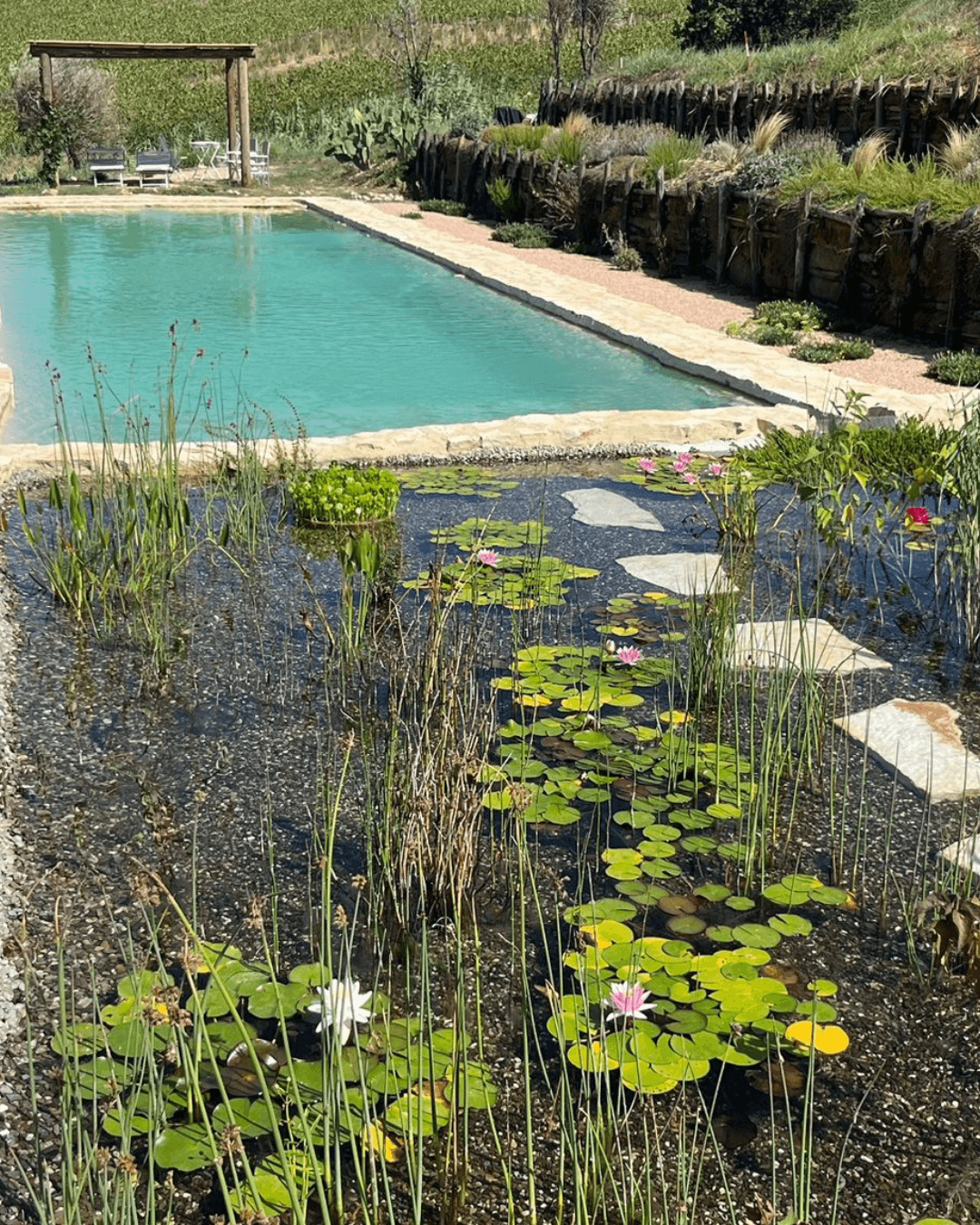
The plants growing in and around the regeneration area are not simply there to make the pool beautiful. Their roots create habitat for microorganisms and countless tiny aquatic organisms, while the vegetation itself provides shelter, shade and breeding areas for wildlife.
Together, they help transform the regeneration zone into a functioning wetland ecosystem.
Throughout the year, the appearance of this area changes naturally. Some plants emerge, flower and disappear again; others remain below the surface or become dormant during the colder months.
The pool therefore has its own seasons, just like the landscape around it.
MEET THE WILDLIFE
You are not swimming alone - and that’s a good thing
A healthy natural pool quickly becomes much more than a place for people to swim. It becomes a source of water, food, and shelter for many other species.
Some live here. Some reproduce here. Others simply stop by for a drink

FROGS & TADPOLES
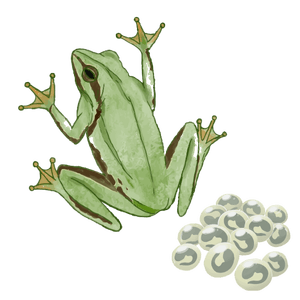
Frogs are among the most familiar residents of the pool. During the breeding season, you may also see tadpoles developing in the quieter areas among the aquatic vegetation. They are a completely natural part of the ecosystem and a wonderful sign of the connection that has developed between the pool and the surrounding landscape.
Frogs also play their part in the natural balance of the pool, feeding on insects and other small organisms.
Here, wildlife is not simply something that lives around the water — many species actively help keep the ecosystem in balance.
If you encounter them, simply let them go about their lives.
DRAGONFLIES & AQUATIC INSECTS
Look closely at the water, and you will discover an entire world that is easy to miss at first.
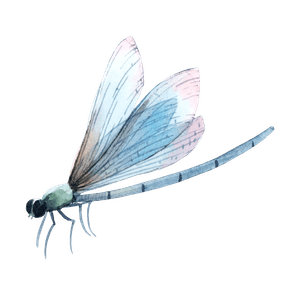
Dragonflies are frequent visitors, together with many smaller aquatic insects. Their larvae live underwater and are natural predators, feeding on mosquito larvae and other small organisms. Together with frogs and other insect-eating wildlife, they help keep mosquito populations naturally under control — one of the reasons why, despite all this water, we generally see surprisingly few mosquitoes around the pool.
So if you notice a strange little creature swimming among the plants, don’t immediately assume it shouldn’t be there.
BEES & WASPS
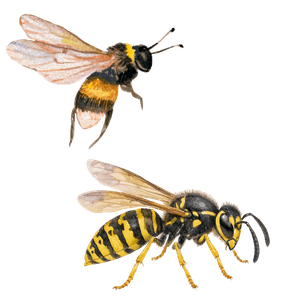
On warm days, you may notice bees and wasps gathering around the small waterfall to drink. There is no need to be alarmed. They are interested in the water, not in you, and will usually continue drinking and leave again. Simply give them a little space and watch where you step around the waterfall, as some may be resting or drinking close to the ground. They are visitors too — just considerably smaller ones.
AN OCCASIONAL VISITOR
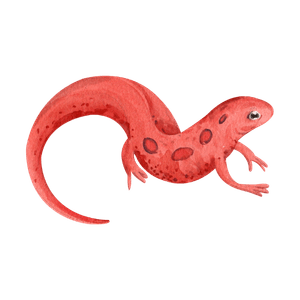
Early one spring, we were lucky enough to spot a salamander near the pool. We haven’t seen it regularly since, so we don’t know whether it decided to stay or simply continued on its way. And that is part of the pleasure of watching a living ecosystem develop: you never quite know who will appear next.
VISITORS FROM ABOVE
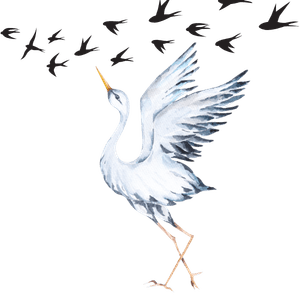
Not all of the wildlife you see around the pool lives here. For many birds, the water has simply become a place to stop for a drink. Every now and then, a heron visits TerraViva and spends some time by the water — an impressive guest that is always a pleasure to spot. During the day, you may also see swallows swooping low over the surface, sometimes skimming the water to drink while still in flight.
Turtle doves are quieter visitors. They often come down to the small waterfall, where they perch for a moment to drink before moving on. Some stay for a while. Others are gone in seconds.
They are all part of the constantly changing life around the pool.
WHEN NIGHT FALLS
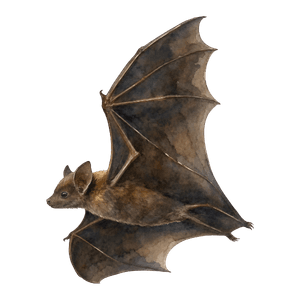
The pool doesn’t become quiet when the sun goes down. It simply welcomes a different set of visitors. At night, two bats regularly fly above the pool, hunting the insects that gather around the water. Watching them dart silently back and forth across the surface is another glimpse of the natural food web that has developed here.
Like frogs, dragonflies and other insect predators, bats help regulate insect populations naturally — each species occupying a different part of the ecosystem and a different time of day. By day, dragonflies patrol the water. By night, the bats take over.
WHAT ABOUT MOSQUITOES?
It might seem logical to expect a natural swimming pool to attract mosquitoes, but a functioning aquatic ecosystem is also home to many of their natural predators. Dragonfly larvae and other aquatic predators feed on mosquito larvae, while frogs, adult dragonflies, bats and other animals feed on insects around the water. Water circulation also means that much of the pool is very different from the small areas of stagnant water in which mosquitoes typically thrive.
The result? Despite all this water, mosquitoes are surprisingly uncommon around our pool.
FROGS & TADPOLES
Frogs are among the most familiar residents of the pool. During the breeding season, you may also see tadpoles developing in the quieter areas among the aquatic vegetation. They are a completely natural part of the ecosystem and a wonderful sign of the connection that has developed between the pool and the surrounding landscape.
Frogs also play their part in the natural balance of the pool, feeding on insects and other small organisms.
Here, wildlife is not simply something that lives around the water — many species actively help keep the ecosystem in balance.
If you encounter them, simply let them go about their lives.
DRAGONFLIES & AQUATIC INSECTS
Look closely at the water, and you will discover an entire world that is easy to miss at first.
Dragonflies are frequent visitors, together with many smaller aquatic insects. Their larvae live underwater and are natural predators, feeding on mosquito larvae and other small organisms. Together with frogs and other insect-eating wildlife, they help keep mosquito populations naturally under control — one of the reasons why, despite all this water, we generally see surprisingly few mosquitoes around the pool.
So if you notice a strange little creature swimming among the plants, don’t immediately assume it shouldn’t be there.
BEES & WASPS
On warm days, you may notice bees and wasps gathering around the small waterfall to drink. There is no need to be alarmed. They are interested in the water, not in you, and will usually continue drinking and leave again. Simply give them a little space and watch where you step around the waterfall, as some may be resting or drinking close to the ground. They are visitors too — just considerably smaller ones.
AN OCCASIONAL VISITOR
Early one spring, we were lucky enough to spot a salamander near the pool. We haven’t seen it regularly since, so we don’t know whether it decided to stay or simply continued on its way. And that is part of the pleasure of watching a living ecosystem develop: you never quite know who will appear next.
VISITORS FROM ABOVE
Not all of the wildlife you see around the pool lives here. For many birds, the water has simply become a place to stop for a drink. Every now and then, a heron visits TerraViva and spends some time by the water — an impressive guest that is always a pleasure to spot. During the day, you may also see swallows swooping low over the surface, sometimes skimming the water to drink while still in flight.
Turtle doves are quieter visitors. They often come down to the small waterfall, where they perch for a moment to drink before moving on. Some stay for a while. Others are gone in seconds.
They are all part of the constantly changing life around the pool.
WHEN NIGHT FALLS
The pool doesn’t become quiet when the sun goes down. It simply welcomes a different set of visitors. At night, two bats regularly fly above the pool, hunting the insects that gather around the water. Watching them dart silently back and forth across the surface is another glimpse of the natural food web that has developed here.
Like frogs, dragonflies and other insect predators, bats help regulate insect populations naturally — each species occupying a different part of the ecosystem and a different time of day. By day, dragonflies patrol the water. By night, the bats take over.
WHAT ABOUT MOSQUITOES?
It might seem logical to expect a natural swimming pool to attract mosquitoes, but a functioning aquatic ecosystem is also home to many of their natural predators. Dragonfly larvae and other aquatic predators feed on mosquito larvae, while frogs, adult dragonflies, bats and other animals feed on insects around the water. Water circulation also means that much of the pool is very different from the small areas of stagnant water in which mosquitoes typically thrive.
The result? Despite all this water, mosquitoes are surprisingly uncommon around our pool.
A LIVING POOL CHANGES
The water will not look exactly the same every day
A conventional swimming pool is designed to remain as chemically controlled and visually uniform as possible.
A natural swimming pool is different. It responds continuously to its environment. Sunlight, temperature, rain, wind, pollen, dust, leaves, bathing activity and the natural cycles of plants and microorganisms can all influence the water.
At different times, you may notice small particles, leaves, insects, or subtle changes in the water’s appearance.
This does not mean that the pool has been neglected. It means that you are swimming in a system that remains connected to the natural world around it rather than being chemically isolated from it.
HELP US KEEP IT HEALTHY
A few simple things make a big difference
By swimming here, you temporarily become part of the ecosystem too.
Because the pool relies on biological balance rather than continuous chemical disinfection, what enters the water matters.
We therefore ask you to help us protect it with just a few simple precautions.
1. Sunscreen, body oils & cosmetics
Sunscreens, body oils, and other cosmetics can enter the water and disrupt the delicate balance of a natural pool.
Please avoid applying sunscreen, body oils or cosmetics immediately before swimming. If you are already wearing them, please use the shower before entering the pool.
2. Pool cleaning robot
At certain times, you may see the robotic cleaner working on the bottom of the swimming area.
Please do not enter the water while the robot is operating. Once it has finished and has been removed from the pool, you can swim normally.
3. Wildlife
Please enjoy observing the animals that share the pool and regeneration area with us.
There is no need to touch, catch, or move them. Most will disappear on their own if given a little space.
PART OF TERRAVIVA
A small ecosystem within a bigger idea
The natural swimming pool is part of a wider idea behind TerraViva: to create a place where human life and natural systems do not need to be separated from one another.
Water, plants, insects, birds, animals and people all use this space in different ways.
We swim here.
A swallow drinks here.
A frog reproduces here.
A bee stops at the waterfall.
Plants grow, microorganisms work unseen beneath the water, and occasionally a new visitor appears.
For a little while, we all share the same place.
Next time you walk around the pool, take a moment to look beyond the swimming area: Watch the insects hovering above the water. Look between the aquatic plants. Listen for frogs. Notice the birds arriving for a drink or the movement of something small beneath the surface.
What may initially appear to be simply landscaping around a swimming pool is actually one of the most active parts of the entire system.
The longer you look, the more life you begin to notice.
Thank you for enjoying it with us – and for helping us take care of it.
 English
 Italian
 German
